

Your words are telling a story.
Is it the one you meant to tell?
A report, a policy, a campaign, a leadership think piece. Each one communicates something about whose experience counts, whose voice gets heard, and who is expected to do the adapting.
Most of the time, it’s not the story you intended to tell.
At one place I worked, the organisation decided to celebrate International Women’s Day by gathering its senior women on a stage to talk about their successes. In the presence of a newspaper photographer, of course.
It very quickly became clear that the goal was not to celebrate these women’s successes but to parade them as proof that promotion was possible at an organisation who traditionally did not promote female staff. We sat through a lecture on what women could do to improve our chances of promotion. Not how the organisation itself might be structurally inequitable. The message was clear: they did it, why can’t you?
But one by one, the women on that stage admitted they had sacrificed a personal life for a professional life.
The organisation’s response? A follow-up event: a “dress for success” seminar. For female staff.
Nobody involved intended to do harm. But the framing told a different story entirely: the problem is not the organisation, it’s you.
Language and framing are not style. They are substance. The words an organisation and its leadership choose shape how people are seen and what is treated as normal. When done well, communication builds genuine connection. When done carelessly, even with the best of intentions, it excludes the very people it is trying to reach.
Meet Sorcha
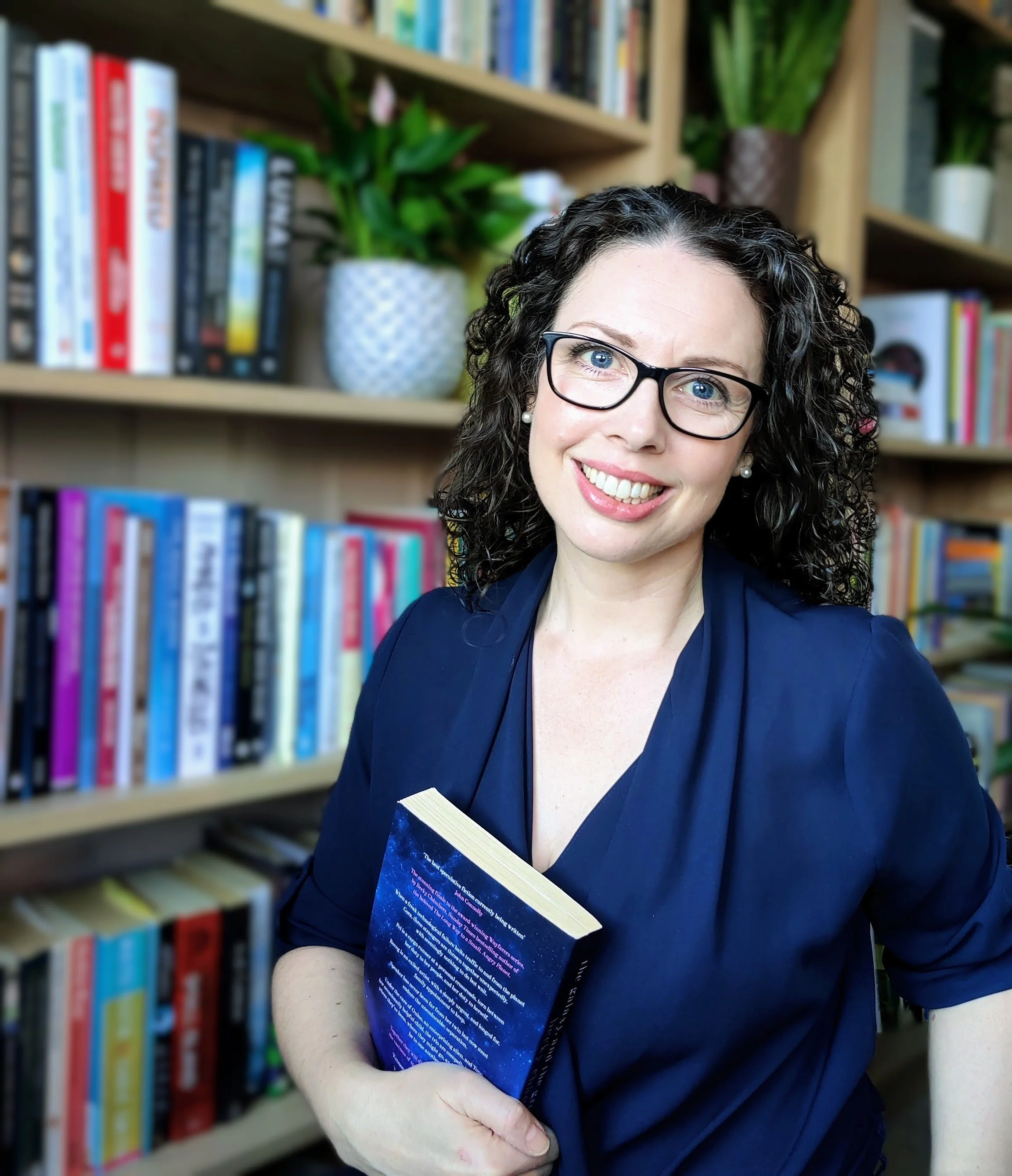
I’m Sorcha Gunne. I have spent over twenty years researching how language shapes the way we think about gender, race, power, and difference, and making those ideas accessible to and attainable for everyone, from first-year undergraduates to PhD researchers.
At NUI Galway, I founded an equality committee from the ground up and turned it into a body that delivered real institutional change. That is the approach I bring to this work: not abstract principles, but practical insight that actually shifts how people communicate.
Today, I work with leaders in business who want to convey the philosophies and values they feel passionate about with personality. Think of me as your personal professor for inclusive communication.
Maybe this sounds familiar.
You’re the person who notices. The annual report that uses “chairman” on every page. The careers page that talks about “family-friendly policies” but only shows one kind of family. The marketing copy that means well but lands badly with the people it is supposed to include.
You’ve flagged these things before. Sometimes people listen. Sometimes they say, “Everyone knows what we mean.” And you’re left thinking: do they, though?
You’ve tried the AI tools. They catch the obvious stuff, gendered pronouns, outdated terms. But you know the problems run deeper than swapping a word. A policy can use all the right terminology and still centre one experience while marginalising others. Who speaks first, whose perspective is assumed as default, whose story gets told. No algorithm reads for that.
You’ve sat through diversity training that felt like a tick-box exercise. You don’t want that again. You want someone who actually understands how language works, and who can explain, clearly and specifically, what is happening, why it matters, and what to do about it.
The same lens. A different text.

I also work as a developmental editor for fiction, and everything I do is shaped by what I call the dual lens: writing craft and inclusive storytelling, working together.
For fiction, that means helping writers create authentic characters and worlds that don’t rely on unconscious bias or tired tropes. For leaders in business, it means the same rigour applied to a different kind of text: your reports, campaigns, policies, and communications.
Both come down to the same question: what story is this language telling about who matters?
The difference depth makes.
My clients come to me thinking, “I believe this is inclusive, but I’m not sure.” They leave knowing it is, and understanding why.
That is the real shift. Not just a corrected document, but a team that starts to see what it could not see before. The framing that centres one perspective. The assumption baked into a policy’s structure. The gap between what your communications say and what they actually communicate.
The difference between a one-off fix and a lasting shift in how your organisation communicates is as simple as understanding the reason informing the change. This is built into all my review work because it’s what I feel passionate about. Once we understand the potential misstep, we can avoid it in future.

How We Work Together
An Inclusive Communication Review is an expert analysis of your written content: reports, marketing materials, internal communications, policy documents, website copy, and thought-leadership pieces. Reviewed for unconscious bias, non-inclusive language, problematic representation, and missed opportunities. This is not a tick-box exercise. It is twenty years of specialist knowledge applied to your words.
Document Review
A detailed review of your content, with feedback on what needs changing and why.
What’s included:
✔ Annotated comments throughout your document identifying bias, non-inclusive language, problematic framing, and missed opportunities
✔ A summary report with key findings, patterns, and practical recommendations
✔ Clear explanations of the “why” behind every issue
✔ Practical alternative language and framing suggestions
Pricing: Up to 5,000 words: €400 to €600 | Above 5,000 words: €80 to €100 per hour, scope agreed in advance
Final pricing depends on document length and complexity. I’m always transparent about costs before any work begins.
Consultation
A focused conversation to discuss findings, talk through your inclusive communication strategy, or work through a specific challenge. Sometimes you don’t need a full review. You need an expert to think it through with you.
Pricing: €90 to €120 per hour (1-hour minimum)
What Working Together Looks Like
1. You get in touch. Tell me about the document, its audience, and any concerns you have.
2. We agree the scope. Document length, timeline, what you need.
3. I send you a clear proposal. Pricing, timeline, and what to expect. No surprises.
4. I get to work. I read your document with care and critical depth, annotate it, and write up my findings.
5. You receive your feedback. An annotated document and summary report. Everything explained clearly enough to share with your team.
6. We talk it through (optional). A consultation to discuss findings and how to implement the changes.
Background and credentials
✔ PhD in English and Comparative Literary Studies (University of Warwick, UK)
✔ BA (Hons.) English Literature and Anthropology (Maynooth University, Ireland)
✔ 20 years teaching fiction, literary theory, feminism, and postcolonial studies at universities in the UK, Ireland, and Norway
✔ 94% of students rated teaching “very good” or “excellent”
✔ Published books and peer-reviewed research on representation and inequality with Routledge and Palgrave Macmillan, spanning literature from four continents
✔ Co-founder, international research network (nearly 2,000 members)
✔ Guest Researcher, Centre for Gender Research, University of Oslo
✔ Founder and Chair, Equality, Diversity and Progression Committee (NUI Galway), delivering facilities for working parents, a mentoring programme, and contract reforms
✔ Member, Athena SWAN Self-Assessment Team (institutional gender equality accreditation)
✔ Pro and Industry Judge, Writing Battle (ongoing)
✔ Times Higher Education Award for Excellence and Innovation in the Arts
✔ Member, Editorial Freelancers Association (EFA)
✔ Based in Oslo, Norway. Working globally.
You know what you want to say. I can help you say it well.
Tell me what you’re working on. There is no obligation and no jargon. Just an honest conversation about what your content needs.
I also work with fiction writers on developmental editing. Find out more.